
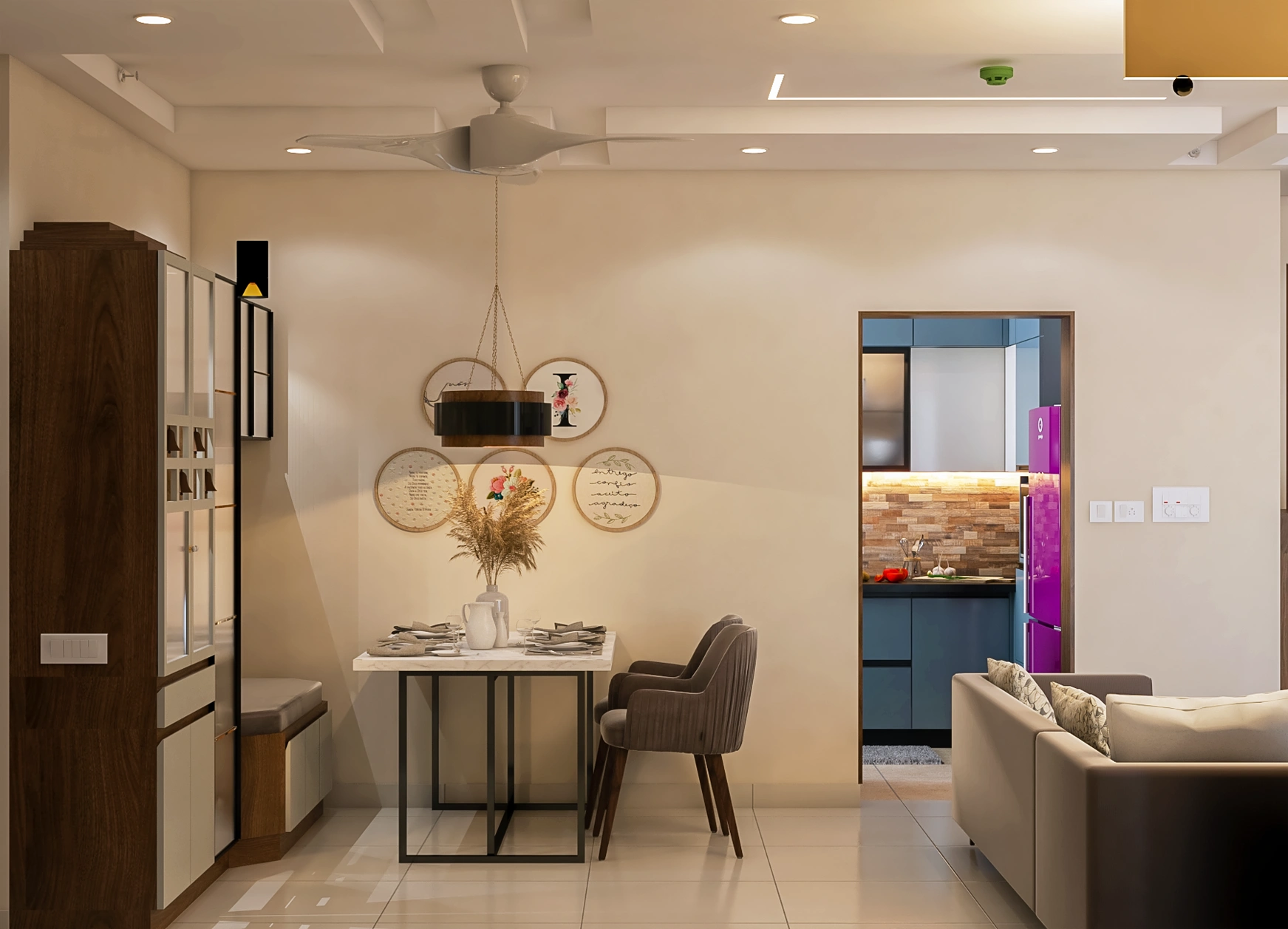
Home interior designers in Shimoga help homeowners create dining spaces that combine elegance, comfort, and functionality. A dining area is more than a place to enjoy meals; it is where families connect, guests gather, and everyday moments become memorable. With thoughtful furniture selection, suitable lighting, coordinated colours, and smart space planning, even a simple dining area can become an inviting feature of your home.
Modern dining room interiors focus on creating a balance between aesthetics and practicality. Whether you have a dedicated dining room or an open-plan dining area connected to your living room, the right design choices can improve the appearance and usability of the space.
At WeDezine Studio, the approach to interior design centres on understanding homeowners’ preferences and creating spaces that suit their lifestyles. From elegant dining tables to decorative wall panels and layered lighting, carefully planned details can transform an ordinary dining area into a stylish and welcoming environment.
1. How Home Interior Designers in Shimoga Create Elegant Dining Spaces
A dining space that works well begins with a clear look at your room and daily routine. You need to think about the square footage and how the household actually moves through the area.
Also consider who uses it and what items must fit there. The dining area does not exist alone, so the link to other rooms matters too.
For instance, a small apartment often does best with a table that seats four. A slim frame can help keep the walkway open. In a bigger house, a six-seat table may feel right, especially with soft chairs and a nice wall detail.
Here are key parts to plan for in a dining room:
- Pick furniture that fits. Measure first so the table does not block doors or paths.
- Choose seats that feel right. Look at chair height, back support, and the kind of fabric or cover.
- Set the lights in a sensible way. A pendant light or a chandelier can draw attention to the table area.
- Match the tones. Simple neutral shades can work well with warm wood textures.
- Add small touches for style. Artwork, a mirror, plants, or wall panels can bring more warmth.
Home Interior Designers in Shimoga put these pieces side by side. The goal is a space that looks neat and still makes everyday meals easier.
2. Choose the Right Dining Table for Your Home
The dining table is usually the central feature of the dining area. Its shape, material, and size influence the room’s overall appearance and functionality.
Rectangular tables work well in longer rooms and can accommodate larger families. Round tables encourage conversation and are often suitable for smaller or square-shaped dining areas. Extendable tables provide flexibility when additional seating is occasionally required.
Popular dining table styles include:
- Wooden dining tables: Introduce warmth and suit traditional and contemporary interiors.
- Glass-top tables: Create a lighter visual appearance in compact spaces.
- Marble-look tables: Add a sophisticated touch to modern dining rooms.
- Round dining tables: Support comfortable conversation and can soften angular layouts.
- Extendable dining tables: Offer flexibility for changing household needs.
When choosing a dining table, consider the number of people who will use it regularly. Ensure that there is enough clearance around the table for chairs to move comfortably and for people to walk past without difficulty.
A well-proportioned table helps the dining area feel organised rather than overcrowded.
3. Dining Room Lighting Ideas by Luxury Interior Designers in Shimoga
Lighting plays an important role in defining the dining area’s atmosphere. The right fixture can make the dining table a focal point while providing sufficient illumination for meals and conversations.
Luxury interior designers in Shimoga may incorporate statement lighting, concealed ceiling lights, or decorative wall fixtures depending on the home’s style and layout.
Consider these dining room lighting ideas:
- Pendant lights: Hang a pendant above the dining table to establish a clear visual centre.
- Chandeliers: Introduce elegance into spacious dining rooms.
- Recessed ceiling lights: Provide general illumination without visually cluttering the ceiling.
- Wall sconces: Add soft lighting and highlight artwork or decorative panels.
- Dimmable lights: Allow brightness to be adjusted for everyday meals and special occasions.
The size of the fixture should correspond to the dining table and the room’s proportions. A fixture that is too large may dominate the space, while one that is too small may lack visual impact.
Warm-white lighting can create a welcoming atmosphere, while well-distributed ambient lighting helps maintain visibility throughout the room.
What Is the Best Lighting for a Modern Dining Room?
Pendant lights positioned above the dining table are a popular choice for modern dining rooms. They can be combined with recessed ceiling lights for general illumination and dimmable lighting for added flexibility. The ideal arrangement depends on the ceiling height, table size, and overall interior design.
4. Create a Stylish Dining Feature Wall
A dining feature wall can add depth and personality without requiring extensive decoration throughout the room. It also helps visually distinguish the dining area in an open-plan home.
The design should complement the dining table, chairs, flooring, and nearby living space.
Some creative feature wall ideas include:
- Wooden slat panels: Add texture and a contemporary architectural appearance.
- Decorative wall mouldings: Create a refined look in modern classic interiors.
- Textured finishes: Introduce subtle depth through stone-inspired or plaster-effect surfaces.
- Wall art: Express personal style through carefully selected artwork.
- Mirrors: Reflect light and create a sense of openness when positioned appropriately.
For a sophisticated look, combine a neutral wall with warm wood accents and carefully placed lighting. In a compact dining area, avoid overly busy patterns that may make the space feel crowded.
WeDezine Studio can help homeowners explore combinations of finishes, colours, and decorative elements that complement their preferred interior style.
5. Use Colours and Materials to Enhance Dining Room Interiors
The colours and materials used in a dining room influence its mood and visual character. Neutral palettes provide a versatile foundation, while contrasting textures create interest.
Beige, cream, white, and soft grey can make the dining area feel bright and understated. Walnut and other wood finishes introduce warmth, while black accents can create a contemporary contrast.
Here are some combinations worth considering:
- Beige and walnut: Create a warm, elegant dining environment.
- White and natural wood: Offer a clean, contemporary appearance.
- Grey and black: Suit modern interiors with strong visual contrast.
- Cream and muted gold: Introduce subtle sophistication.
- Earthy green and wood: Bring a natural, relaxed feeling to the space.
Material selection should also account for maintenance and durability. Dining tables need surfaces that can withstand regular use, while chair upholstery should be easy to clean. Finishes around the dining area should be chosen with everyday spills and cleaning requirements in mind.
A coordinated material palette helps create continuity between the dining room, kitchen, and living area.
6. Smart Dining Area Designs for Compact Homes
Not every home has a separate dining room. In apartments and smaller houses, the dining area may share space with the living room or kitchen.
With efficient planning, a compact dining space can still be comfortable and attractive.
Practical space-saving ideas include:
- Use a round table: A compact round table can make circulation easier in suitable layouts.
- Choose a wall-side arrangement: Position the table near a wall when it helps preserve the main walking path.
- Consider a dining bench: A bench can be tucked under the table when not in use.
- Use vertical storage: Wall-mounted shelves or compact cabinets can keep dining essentials organised.
- Define the dining zone: Use a pendant light, rug, or feature wall to distinguish the area from the living room.
- Select multifunctional furniture: Extendable tables can accommodate extra guests when needed.
The most important consideration is circulation. People should be able to sit down, pull out chairs, and move between the dining area and adjoining spaces without difficulty.
7. Combine Storage and Display for a Functional Dining Area
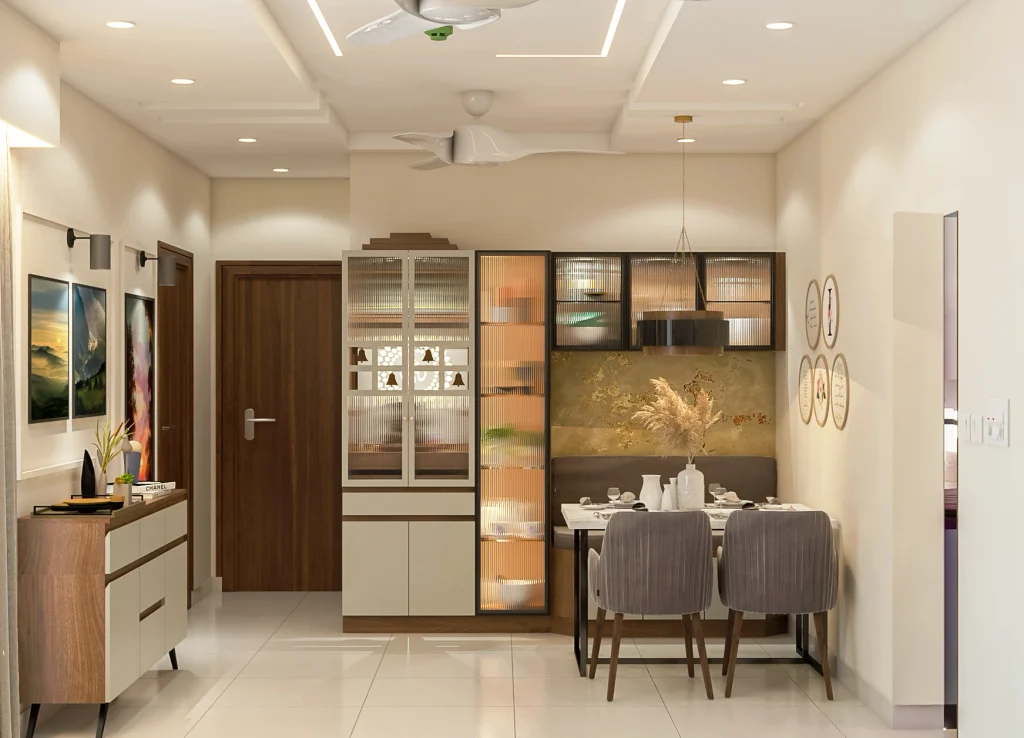
Dining room storage helps keep everyday essentials accessible while maintaining an uncluttered appearance. Depending on the available space, homeowners can incorporate a sideboard, crockery cabinet, or built-in storage unit.
A sideboard can store tableware, serving dishes, and table linen while providing a surface for decorative accessories. A glass-fronted cabinet can display selected crockery, while closed cabinets conceal items that are not used regularly.
For a balanced arrangement:
- Match cabinet finishes with the dining table or nearby furniture.
- Use internal organisers to keep tableware neatly arranged.
- Include open shelves only where they can be maintained easily.
- Avoid oversized storage units in compact dining rooms.
- Add subtle cabinet lighting when display storage is a key design feature.
The right storage solution should reflect how the household uses the dining area rather than simply adding furniture for decoration.
8. How Interior Design Services in Shimoga Can Transform Your Dining Area
Professional interior design services in Shimoga can help homeowners plan dining spaces that combine their personal preferences with practical requirements.
The design process may include understanding the room dimensions, preparing furniture layouts, selecting materials, coordinating lighting, and identifying appropriate storage solutions.
Before starting a dining room project, consider the following:
Space planning: Determine the table size, seating arrangement, and walking clearance.
Design style: Decide whether you prefer contemporary, minimalist, traditional, or modern classic interiors.
Material selection: Compare finishes based on appearance, durability, and maintenance.
Lighting design: Plan general illumination and accent lighting according to the layout.
Budget planning: Prioritise essential furniture and finishes before adding optional decorative elements.
Design coordination: Ensure the dining area complements the kitchen and living room, particularly in open-plan homes.
At WeDezine Studio, these considerations can help shape a dining interior that reflects the homeowner’s lifestyle and the character of the home.
9. How to Choose the Right Home Interior Designers in Shimoga
Picking the right interior design team matters if you want your dining space to match what you imagine.
First, check the company’s portfolio. Look at how they handle other rooms and how they arrange layouts. See what they do with dining chairs and tables. Also note feature walls, the lighting style, and how they match materials across surfaces.
Before any work starts, talk through your needs. Tell them how many people will usually eat there. Mention if you host friends often. Also say what kind of storage you expect, like cabinets, shelves, or space for serving items.
Then ask clear questions about the project. Find out what parts are included, what materials they can use, and what schedule they expect. Get the budget details early. When communication is direct, it is easier to prevent mix ups and keep the process on track.
A good design partner should balance looks with day to day function. The dining area should feel easy to use, not just nice to look at.
1. What are the latest dining room interior design trends?
Popular dining room ideas include pendant lighting, natural wood finishes, upholstered chairs, neutral colour palettes, decorative feature walls, and multifunctional furniture. The best choice depends on the available space and the homeowner’s preferences.
2. How can I make a small dining area look elegant?
Choose appropriately sized furniture, use a coordinated colour palette, and add one or two focal elements, such as a pendant light or decorative wall. Keep pathways clear and avoid excessive accessories to make the space feel more open.
3. Which dining table is best for a modern home?
Rectangular tables suit longer rooms, while round tables can work well in compact or square layouts. Wooden, glass-top, and stone-look tables are all suitable options, depending on the preferred style, maintenance requirements, and budget.
4. How much does dining room interior design cost in Shimoga?
The cost depends on the dining area’s size, furniture selection, materials, lighting, storage requirements, and whether structural or electrical work is needed. A customised quotation based on the scope of work is the best way to estimate the budget.
5. Why hire Home Interior Designers in Shimoga?
Home Interior Designers in Shimoga can help with furniture layouts, lighting plans, colour coordination, material selection, and space optimisation. Professional planning can help create a cohesive dining area that suits your home and daily routine.
Conclusion: Design an Elegant Dining Space with WeDezine Studio
A thoughtfully designed dining area can make everyday meals more enjoyable while creating a welcoming space for family and friends. The right combination of furniture, lighting, colours, textures, and storage can enhance both functionality and visual appeal.
Whether you are planning a compact dining corner or an elegant dining room, focus on comfortable seating, suitable proportions, practical materials, and a design that complements the rest of your home.
WeDezine Studio helps homeowners explore interior design possibilities that balance contemporary aesthetics with everyday comfort. If you are planning to upgrade your dining space, connect with WeDezine Studio to discuss your requirements and create a dining area that reflects your style.
