
Interior design firms in Bangalore projects are increasingly moving beyond conventional ideas of luxury and decoration. Today, homeowners are looking for interiors that feel personal, warm, functional, and thoughtfully designed. At WeDezine Studio, we approach interior design as the art of bringing architecture, materials, lighting, furniture, and craftsmanship together to create spaces with a distinct identity.
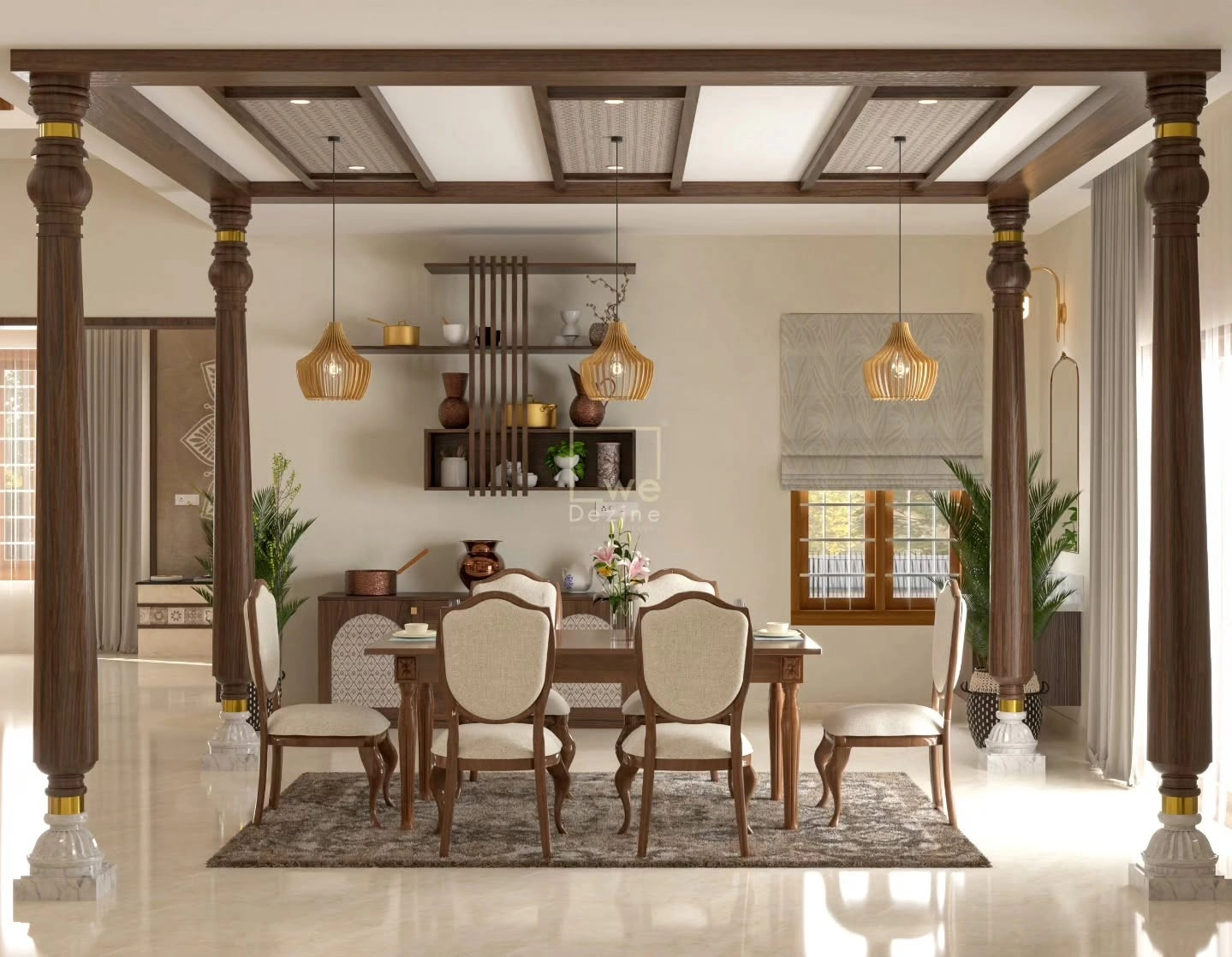
The featured dining interior reflects this philosophy. Rather than relying on excessive ornamentation, the design creates impact through carefully considered details—rich timber, traditional architectural references, natural textures, soft lighting, crafted furniture, and a balanced neutral palette.
The result is an interior that feels rooted in Indian design while maintaining a contemporary sense of proportion and sophistication.
Interior Design Firm in Bangalore: Designing Beyond the Surface
A well-designed interior is not simply about how a room looks. It is about how every element contributes to the experience of space.
The dining area featured here demonstrates how architectural detailing can establish a strong visual identity. The substantial timber columns frame the dining zone almost like an architectural pavilion, giving the space definition without creating a physical enclosure.
Above, the detailed ceiling introduces another layer of craftsmanship. Carefully positioned lighting within the ceiling structure adds depth while maintaining a clean overall composition.
For WeDezine Studio, these details are essential to creating interiors that feel complete. The objective is not to fill a room with decorative elements but to determine which features deserve attention and how they should interact with one another.
This approach allows even functional spaces to become memorable parts of the home.
Luxury Interior Designers in Bangalore: Creating Sophistication Through Detail
Luxury in modern homes has changed a lot over time. In Bangalore, interior designers often treat luxury as something you can feel in day to day living. It is about good materials, solid craft work, right proportions, comfort, and careful finishing. Costly surfaces alone do not define it anymore.
This dining area shows that thinking clearly.
First, the timber columns set a rich mood right away. Their classic shape nods to Indian building traditions. At the same time, the plain wall areas keep the look current and neat.
Next come the lights above the table. The pendants are made in a woven style and have a sculpted feel. They add texture to the space and give a soft glow over the dining surface.
The dining set stays calm and simple. The upholstered chairs soften the room against the timber and flooring. That mix makes the seating feel comfortable, but it does not look cluttered.
In the end, luxury here is built in layers. Layers of material, texture, light, proportion, and craftsmanship make the space feel planned from many angles.
The Modern Indian Interior: Where Heritage Meets Contemporary Design
A key strength of this project is how it blends Indian design roots with a modern look.
The timber columns stand out right away. You can see echoes of older Indian houses and well made interior spaces. Yet the columns sit inside a wide, open plan, so the effect feels current, not old.
WeDezine Studio holds this view in high regard. Using the past does not mean copying it exactly. It only needs to matter.
Old design ideas can be trimmed down, reshaped, or woven into new buildings. Craft work can show up in many ways, like wood detailing, hand-made lights, textiles, wall pieces, stone, or furniture. With the right mix, the room does not end up looking stuck in a past era.
In the end, the home keeps its cultural ties while still fitting today’s daily living.
Best Interior Company Bangalore: Making Function Part of the Design
When homeowners search for the best interior company in Bangalore, one of the most important considerations should be how effectively the designer combines aesthetics with everyday functionality.
A dining area has a straightforward purpose, but its design requirements extend beyond placing a table and chairs.
The layout needs to provide comfortable circulation. Lighting needs to illuminate the dining surface without creating glare. Furniture needs to be proportionate to the room. Storage and serving areas need to be conveniently accessible. Decorative elements should enhance the experience without obstructing movement.
In this design, functionality is integrated into the overall composition.
The dining table anchors the room, while the surrounding furniture and architectural framing establish a clear dining zone. The open circulation around the table maintains a sense of spaciousness.
This is where thoughtful interior planning makes a difference. When functionality is considered from the beginning, practical elements can become part of the visual language rather than looking like additions.
The Power of Timber in Contemporary Interior Design
You can see its grain right away, and the color feels inviting. It also adds weight to the dining space and gives it a clear, built form. The plan is not limited to the chairs or tables. Wood shows up in the columns, the ceiling frame, and the built-in storage.
That choice ties the areas together.
When you carry the same material through multiple details, the space tends to feel joined. Still, you need to watch the amount and the placement. Too much timber can overpower everything.
In this room, the wood works against light walls, pale fabric on the seating, simple window coverings, and glossy flooring. That mix keeps the darker tones from taking over.
It also helps the maker’s work show through, because the rest stays calm.
Lighting as a Design Element
Lighting is one of those interior details people skip without realizing it.
In this dining room, the pendant lights do more than shine. Their forms shape how the space looks. You notice them right away.
They hang over the table and act like a focal point. At the same time, the room feels softer and more welcoming. Recessed lights in the ceiling add extra glow, but they do not fight with the pendants.
This is a good example of layered lighting done right.
Ambient light sets the general level. Task light helps with day-to-day actions at the table. Decorative light adds style. When all of it is set up as one plan, the lighting starts to feel part of the architecture, not a late add on.
At WeDezine Studio, lighting is handled along with materials and layout. The goal is simple. The interior stays inviting, even as the day moves on.

Creating Visual Balance Through Texture and Colour
Another important feature of the dining interior is its restrained colour palette.
Warm wood, beige upholstery, soft walls, natural textiles, and muted decorative elements create a calm visual foundation. Instead of relying on bold colours, the design achieves richness through variations in texture.
This is particularly effective in contemporary Indian interiors.
A neutral palette provides flexibility, while natural textures prevent the room from appearing flat or sterile. The patterned elements, plants, lighting fixtures, and handcrafted accessories then introduce smaller moments of visual interest.
The result is sophisticated without feeling overly formal.
This principle can be applied throughout a home. A restrained palette does not mean a lack of personality. When materials, textures, forms, and proportions are carefully selected, neutral interiors can have tremendous depth.
Designing Transitional Spaces with Purpose
The second view of the project reveals a smaller but equally important area—the dining wash or vanity space.
Rather than treating this as a purely functional corner, the design gives it its own identity through a combination of timber cabinetry, a natural stone basin, a large mirror, soft lighting, and greenery.
This is an excellent example of how transitional and utility spaces can contribute to the overall design story of a home.
The vanity combines natural materials with clean contemporary forms. The stone basin adds a sculptural quality, while the timber cabinetry connects the area visually to the dining space.
The mirror enhances the sense of openness and reflects both light and material textures.
It is these smaller moments that often elevate an interior from ordinary to thoughtfully designed.
WeDezine Studio: Creating Homes with a Distinct Design Language
At WeDezine Studio, we feel a home should show its real identity. That identity comes from the building style and the people living inside.
We work through space step by step. We look at the layout first, then test materials. We also plan the details, pick furniture, set the lighting, and finish with styling.
We do not use one set recipe for every project. We build the look around what the space is and what the client needs.
If the plan leans modern, classic, minimal, or more upscale, we still keep the same goal. The room should work well and feel like one connected whole.
The dining space shown here reflects that same idea. The timber work brings warmth and character. The lights shape the mood. The furniture makes it comfortable. The materials tie everything together.
Creating Strong Interiors Through Thoughtful Design
A strong interior does not necessarily need dramatic colours or elaborate decoration. Sometimes, the most memorable spaces are created through a few carefully executed decisions.
A beautifully detailed column can define an entire room. A thoughtfully designed ceiling can establish architectural rhythm. The right pendant light can create a focal point. Natural materials can bring warmth. A well-proportioned piece of furniture can make a space feel balanced.
That is the essence of thoughtful interior design.
For homeowners looking for an interior design company in Bangalore, WeDezine Studio brings together these elements to create interiors that are not only beautiful but also purposeful, comfortable, and enduring.
The goal is simple: to turn everyday spaces into thoughtfully composed environments with character, warmth, and a strong sense of belonging.
And when every detail has a reason to exist, even a dining area can make a strong statement.
