
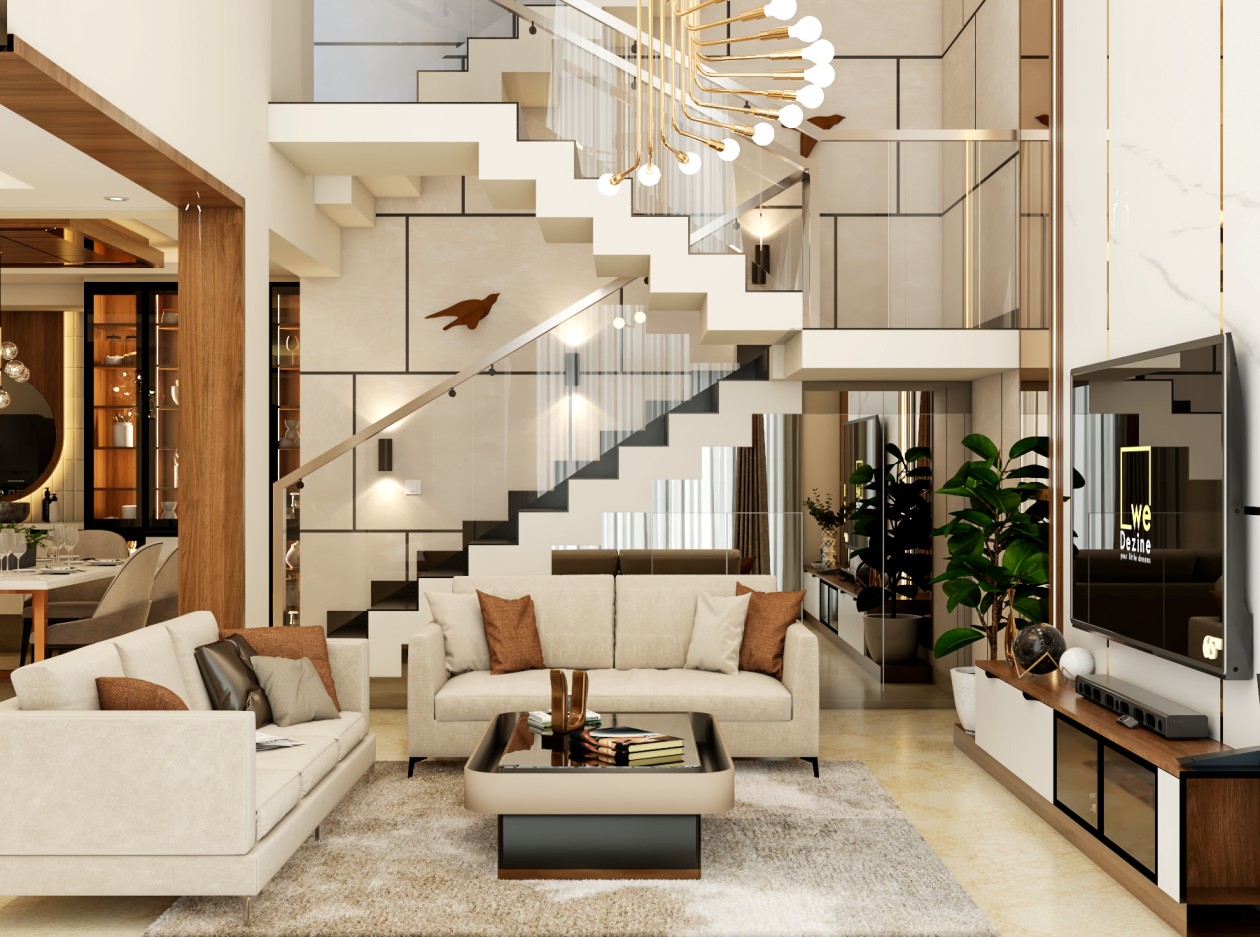
When it comes to creating a well-designed living room, texture plays a crucial, yet often underestimated, role. While color schemes and furniture choices might take center stage, textures are the subtle elements that truly elevate the space from good to stunning. At WeDezine, Bangalore’s premier interior design company, we believe that mastering the art of textures can transform your living room into a rich, inviting, and harmonious environment. Let’s dive deeper into the importance of textures and how you can use them to create a living room that feels balanced and luxurious.
1. What is Texture in Interior Design?
Texture refers to the surface quality of materials and finishes used in a space. It can be visual or tactile, meaning how something looks or feels. For example, a rough brick wall offers tactile texture, while a shiny, metallic surface gives off visual texture. In a living room, textures create depth, interest, and contrast, turning a flat space into one that feels layered and full of character.
2. The Emotional Impact of Texture
Different textures evoke different emotional responses. Soft textures like plush cushions or a velvety sofa give off a sense of warmth, comfort, and coziness. On the other hand, smooth, sleek surfaces like glass and marble exude sophistication and luxury. At WeDezine, we guide clients through creating the perfect emotional ambiance in their living room by carefully balancing these textures.
For a relaxed family-friendly room, you might opt for soft fabrics, wool rugs, and rustic wood, while a more formal living room may feature glass, leather, or metallic finishes.
3. Balancing Textures for Harmony
A well-balanced living room design requires a mix of different textures to create harmony. Too much of one type of texture can overwhelm the space or make it feel monotonous. For instance, an all-wooden living room, without any contrasting materials, might feel too heavy. Similarly, a space filled only with smooth and sleek surfaces can appear cold and uninviting.
By combining various materials—rough with smooth, hard with soft—you add interest to the room. A good design trick is to contrast hard surfaces like marble or wood flooring with soft elements like a shaggy area rug or plush throw blankets.
4. Layering Textures to Add Depth
Layering textures is key to creating depth in your living room. Start by choosing a dominant material, such as a sleek sofa, and then layer it with softer, complementary textures. Throw pillows in varying fabrics, such as cotton, wool, or silk, can make the space feel dynamic. A patterned rug, coupled with textured curtains or a tufted ottoman, brings dimension to your design. This approach ensures that every piece in your living room contributes to the overall aesthetic without competing for attention.
5. Textures and Light
The texture also plays a significant role in how light interacts with a space. Glossy surfaces reflect light, making the room appear brighter and more open, while matte and rough textures absorb light, creating a cozier, more intimate feel. If you have a living room that gets a lot of natural light, consider incorporating both shiny and matte elements. For instance, a glossy coffee table can balance out the matte texture of a linen sofa, creating a harmonious interplay between light and shadow.
6. Nature-Inspired Textures
At WeDezine, we believe in the power of bringing the outdoors in. Incorporating natural textures such as jute, rattan, stone, and wood not only adds a tactile quality to your living room but also creates a grounding and calming effect. In the busy, fast-paced life of Bangalore, these nature-inspired textures can provide a relaxing oasis within your home. Adding a bamboo chair, a stone accent wall, or potted plants in woven baskets can make the room feel more organic and connected to nature.
7. Fabrics and Upholstery
The choice of fabrics in your living room is one of the easiest ways to introduce texture. Upholstery options, from velvet to linen to leather, each bring their unique qualities to the space. Velvet, for example, adds a lush, opulent touch, while linen feels breezy and relaxed. A leather armchair might offer an element of ruggedness, while silk cushions exude elegance. At WeDezine, we emphasize the importance of not only selecting fabrics for their visual appeal but also considering their durability and maintenance for practical living.
8. Textures in Accent Pieces
Textures don’t have to be limited to large pieces of furniture. Accent pieces such as vases, wall art, or even picture frames can add an extra layer of texture to your living room. A ceramic vase with a rough, uneven finish or a textured canvas can bring in visual interest without overwhelming the space. Even something as simple as a textured lampshade can introduce a tactile element that ties the room together.
9. Creating a Personal Touch
Finally, your living room should be a reflection of your personality. Incorporating textures that resonate with your personal style can help make the space feel more intimate and authentic. Whether it’s the woven throw from your travels or a family heirloom rug, these textured pieces add character and tell a story.
Conclusion
At WeDezine, we believe that texture is a vital tool in creating a living room design that is not only visually appealing but also functional, comfortable, and deeply reflective of your style. By thoughtfully layering textures and choosing materials that complement each other, your living room will become a space where beauty and comfort coexist in perfect harmony.
If you’re looking to elevate your living room design in Bangalore, let WeDezine’s expert team guide you through the process of creating a space that feels as good as it looks. Reach out to us today to begin your design journey!
