
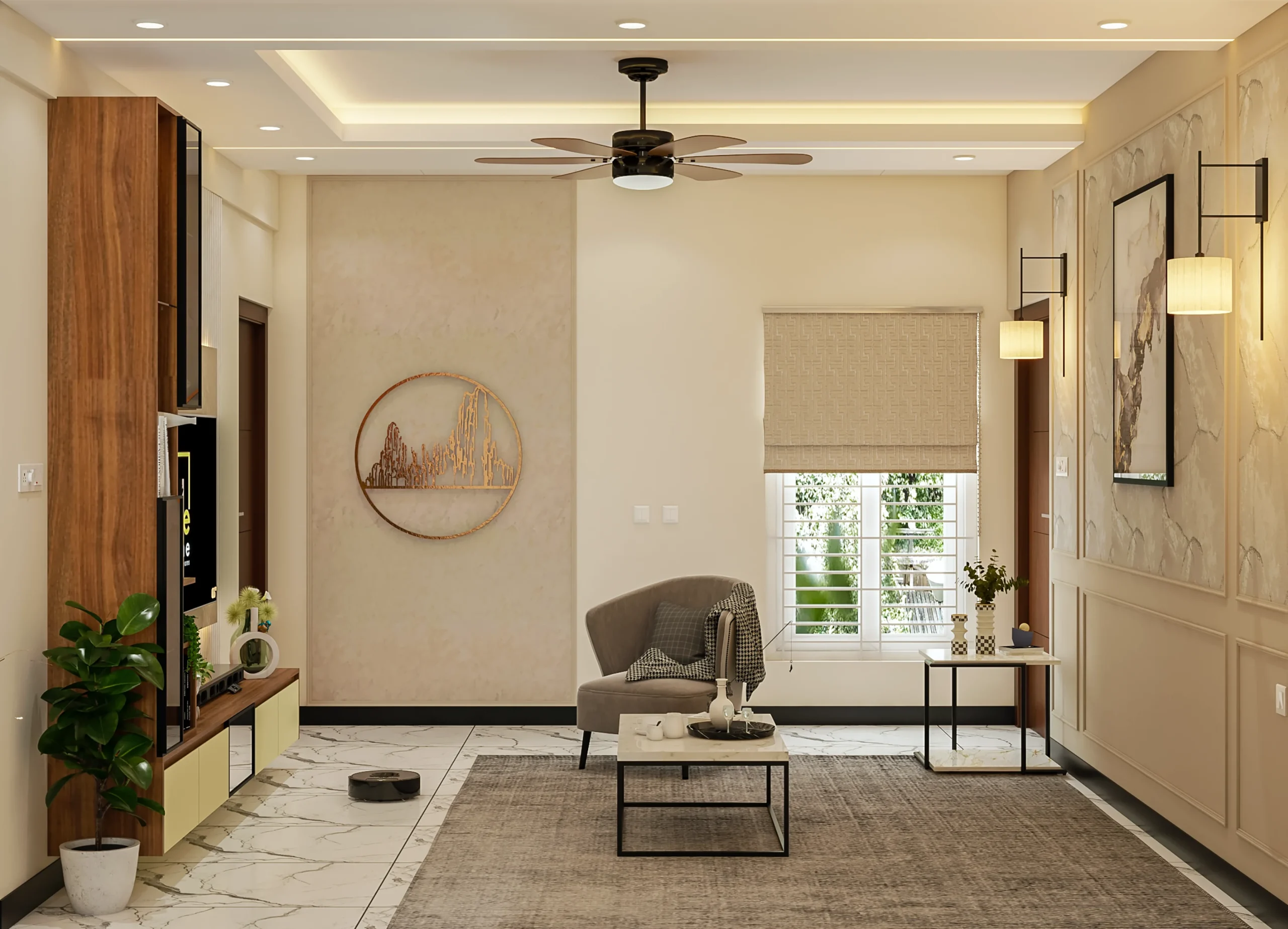
Your living room is the heart of your home, a space for relaxation, socializing, and entertainment. Achieving a balanced living room layout ensures it is both functional and visually appealing. Whether you’re designing a new space or revamping your current one, balance is key to creating harmony and comfort. At WeDezine, we believe in blending aesthetics with practicality, especially when designing homes in vibrant cities like Bangalore. In this blog, we’ll walk you through essential tips to achieve a balanced living room design.
1. Define the Purpose of Your Space
Before arranging furniture and décor, identify the primary function of your living room. Is it a space for family gatherings, TV entertainment, or hosting guests? In Bangalore, where apartments and compact homes are common, the living room often serves multiple functions. Prioritize what matters most, and let that dictate your layout. For example:
- TV viewing: Arrange seating around the TV with ample space for easy viewing.
- Socializing: Create conversation zones by placing sofas and chairs facing each other.
- Multifunctional: If your living room serves multiple purposes, opt for flexible furniture that can be moved or reconfigured.
2. Choose the Right Furniture
Furniture choice significantly impacts balance. Opt for pieces that fit the scale of your room. In Bangalore, where living rooms may vary in size, large, bulky furniture in a small room can feel cramped, while tiny pieces in a large room can leave it feeling empty. Keep these tips in mind:
- Proportion: Ensure the furniture is proportional to the size of your room. Avoid oversized sofas if the space is limited.
- Symmetry: For a balanced look, you can use symmetry by placing matching chairs, lamps, or side tables on either side of the sofa.
- Focal Point: Center the layout around a focal point such as a fireplace, a large window, or an entertainment unit.
3. Create Clear Traffic Flow
No matter the size of your living room, people need to move through it easily. Ensure there is enough space to walk between furniture without obstacles. For a seamless flow:
- Keep pathways wide enough for comfort, typically at least 3 feet.
- Avoid blocking doors or windows with furniture.
- In open-concept living rooms, use rugs or a console table to subtly define pathways.
4. Balance with Visual Weight
Visual weight refers to how heavy or light an object appears based on its size, color, and design. A balanced living room layout uses visual weight to create harmony. Here’s how you can achieve it:
- Distribute Weight Evenly: If you have a large sofa on one side, balance it with a visually heavy piece of furniture like a bookshelf or armchair on the opposite side.
- Layer Textures and Colors: Balance bold or dark-colored furniture with lighter or softer hues. For example, pair a dark leather sofa with soft, neutral cushions and a light-colored rug.
- Add Vertical Elements: Use tall elements like floor lamps or tall plants to balance the horizontal expanse of a sofa or coffee table.
5. Use Rugs to Define Zones
In Bangalore homes, where open-plan living spaces are becoming more common, rugs can help define and balance different zones in the same room. A well-placed rug not only anchors the furniture but also brings cohesiveness to the layout. Here’s how to use rugs effectively:
- Choose a rug large enough so that all the main furniture pieces (sofa, chairs, coffee table) sit on it.
- If you have multiple zones in your living room, such as a TV area and a reading nook, use separate rugs to differentiate each space.
6. Incorporate Vertical Balance
Often, people focus solely on floor-level design, but balancing elements vertically is equally important. Here’s how you can elevate the visual balance:
- Artwork and Mirrors: Hang art or mirrors at eye level to create balance between the upper and lower parts of the room.
- Tall Plants or Shelves: Incorporating tall plants or bookshelves can draw the eye upward and add a sense of height to the room.
- Curtains and Drapes: Use full-length curtains that extend to the floor to add height and drama to the space.
7. Ensure Proper Lighting
Lighting plays a crucial role in creating a balanced and inviting living room. In Bangalore, where natural light can be abundant but varying, it’s essential to layer your lighting for flexibility.
- Ambient Lighting: Overhead lighting, such as chandeliers or ceiling lights, provides overall illumination.
- Task Lighting: Table lamps or floor lamps near seating areas make the space functional for reading or working.
- Accent Lighting: Highlight architectural details, artwork, or decorative items with spotlights or LED strips for a warm, balanced glow.
8. Personalize with Décor
Adding personal touches and decor is the final step to creating a balanced and harmonious living room. However, the key is to avoid over-cluttering. Use these tips for balanced decor:
- Group in Odd Numbers: Arrange decorative items like vases, candles, or picture frames in groups of three or five for a visually appealing balance.
- Balance Bold with Neutral: If you have a bold piece of artwork or a statement decor piece, balance it with softer, neutral elements around the room.
- Mix Textures: Combine different textures like velvet cushions, wooden tables, and metal accents to create visual interest without overwhelming the space.
Conclusion
Achieving a balanced living room layout is all about creating harmony between form and function. Whether you live in a spacious home or a compact Bangalore apartment, these tips will help you make the most of your space. At WeDezine, we specialize in designing homes that reflect your style while enhancing the practicality of your everyday life. Contact us today to transform your living room into a perfectly balanced space that’s both inviting and functional.
