
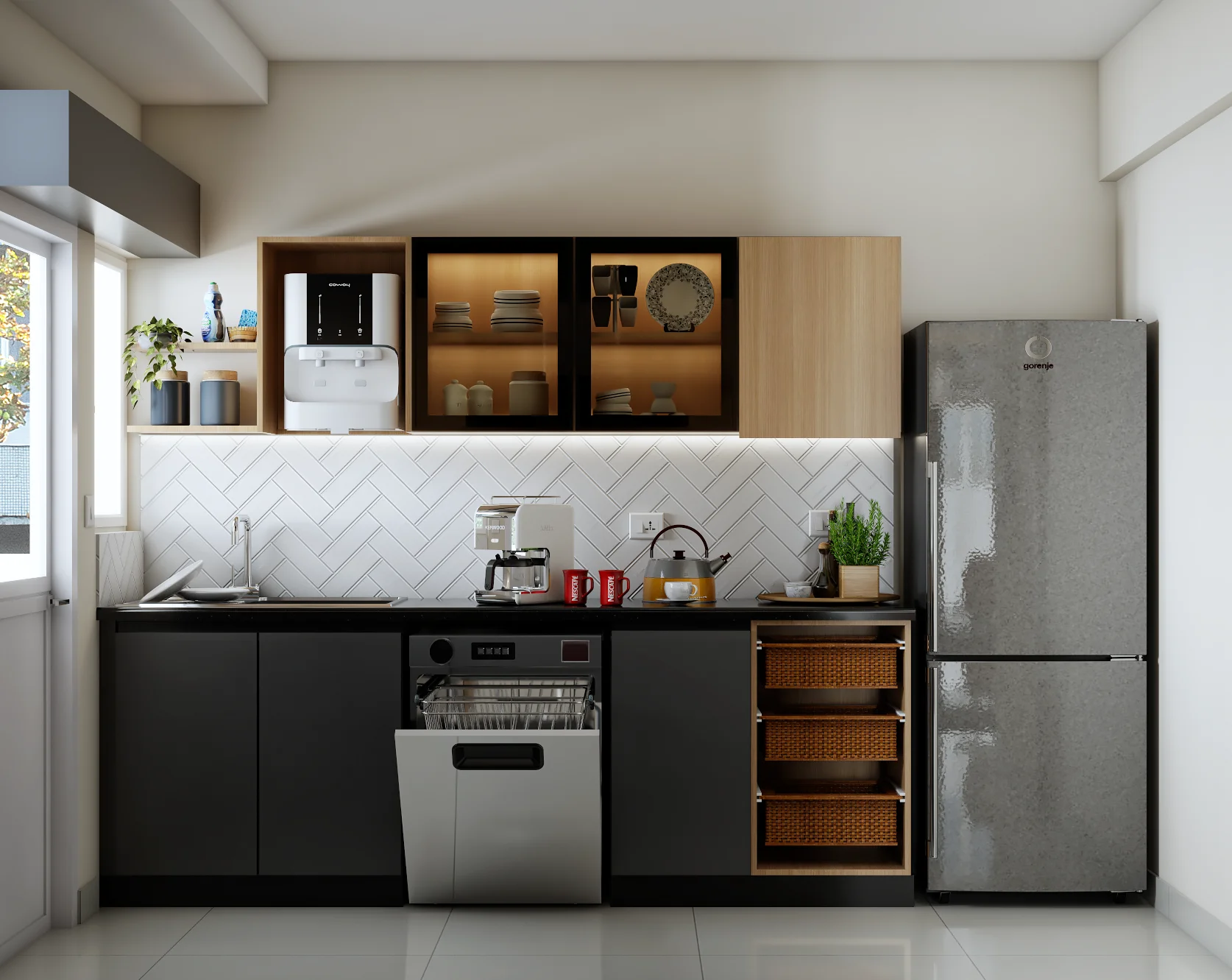
In today’s world, energy efficiency is more important than ever, especially in a space like the kitchen, where most of our daily energy consumption happens. A more energy-efficient kitchen not only helps reduce your carbon footprint but also significantly cuts down on your electricity and water bills. At WeDezine, Bangalore’s leading interior design firm, we believe that with smart design and thoughtful choices, you can transform your kitchen into a greener, more cost-effective space. Here’s how:
1. Upgrade to Energy-Efficient Appliances
One of the biggest culprits of energy waste in the kitchen is outdated appliances. Consider switching to appliances with the Energy Star label, which signifies higher energy efficiency. Modern refrigerators, dishwashers, and ovens are designed to consume less power while still delivering top performance. For instance:
- Induction Cooktops: They use magnetic fields to directly heat pots and pans, consuming less energy compared to traditional gas or electric stoves.
- Energy-Efficient Refrigerators: Opt for a fridge with adjustable thermostats and energy-saving modes.
- Smart Ovens: These ovens can preheat faster and maintain consistent temperatures, using less energy over time.
2. Optimize Lighting
Kitchens often require ample lighting, but that doesn’t mean you need to use a lot of energy. Switching to LED lighting can make a significant difference:
- LED Bulbs: LED lights consume up to 75% less energy and last 25 times longer than incandescent bulbs. Use them under cabinets, over counters, and in main lighting fixtures.
- Natural Lighting: Maximize natural light by positioning windows strategically or adding skylights during renovations. This can reduce the need for artificial lighting during the day.
3. Use Water Wisely
Incorporating water-saving fixtures and habits is another key way to boost your kitchen’s energy efficiency:
- Low-Flow Faucets: These faucets use aerators to reduce water flow without compromising water pressure, cutting down both water and energy usage (especially if your water heater runs on electricity).
- Efficient Dishwashing: Always run your dishwasher with full loads and use the eco-wash cycle. Energy Star dishwashers use less water than handwashing.
4. Insulate and Seal Properly
A lot of energy can be lost through poorly insulated spaces in your kitchen. This is particularly important for kitchens in Bangalore’s varied climate:
- Refrigerator and Freezer Seals: Check that the seals on your fridge and freezer are tight to prevent cold air from escaping and overworking your appliance.
- Windows and Doors: Use weatherstripping and caulking around windows and doors to prevent drafts and maintain stable indoor temperatures, reducing the load on your HVAC system.
5. Mindful Cooking Practices
Your cooking habits also play a role in energy consumption:
- Lid On, Heat Down: When boiling or simmering, keeping the lid on can reduce cooking time and heat loss. Use the right-sized burner for your pots to avoid wasted energy.
- Batch Cooking: Cooking multiple meals in one go saves energy by reducing the need for frequent reheating or using the oven multiple times.
6. Design with Energy Efficiency in Mind
The layout and design of your kitchen also impact its energy efficiency. At WeDezine, we help clients incorporate energy-saving design elements into their kitchen remodels:
- Smart Layout: A well-planned kitchen layout reduces wasted movements, making your cooking process more efficient. For instance, placing the fridge, sink, and stove in a convenient triangle (the work triangle) helps streamline workflow and reduces unnecessary energy use.
- Reflective Surfaces: Consider light-colored countertops and backsplashes, which can reflect natural and artificial light, reducing the need for excess lighting.
7. Invest in Smart Technology
Smart homes are becoming the norm, and your kitchen can benefit too:
- Smart Plugs: These allow you to control appliances remotely and ensure that you’re not wasting energy when you forget to switch something off.
- Smart Thermostats: If your kitchen connects to your home’s central heating or cooling system, a smart thermostat can adjust the temperature based on your schedule, reducing unnecessary energy use.
8. Compost and Reduce Food Waste
Reducing food waste is an indirect yet powerful way to enhance energy efficiency in your kitchen.
- Composting Bins: Set up a composting bin for food scraps instead of relying solely on the garbage disposal. This reduces the strain on waste management systems and cuts energy use from food processing.
- Smart Storage Solutions: By organizing your pantry and fridge effectively, you can reduce food waste and energy consumption from unnecessary refrigeration of expired or unused items.
Final Thoughts
Making your kitchen more energy-efficient doesn’t require a complete overhaul. By incorporating small changes and making smarter choices, you can create a kitchen that’s environmentally friendly, cost-efficient, and beautifully designed. Whether you’re considering a full kitchen remodel or just looking to make a few upgrades, WeDezine is here to guide you every step of the way, ensuring that energy efficiency and style go hand in hand.
At WeDezine, we believe in designing spaces that not only look great but also work towards a sustainable future. Let us help you make your kitchen the heart of an eco-friendly home in Bangalore!
