
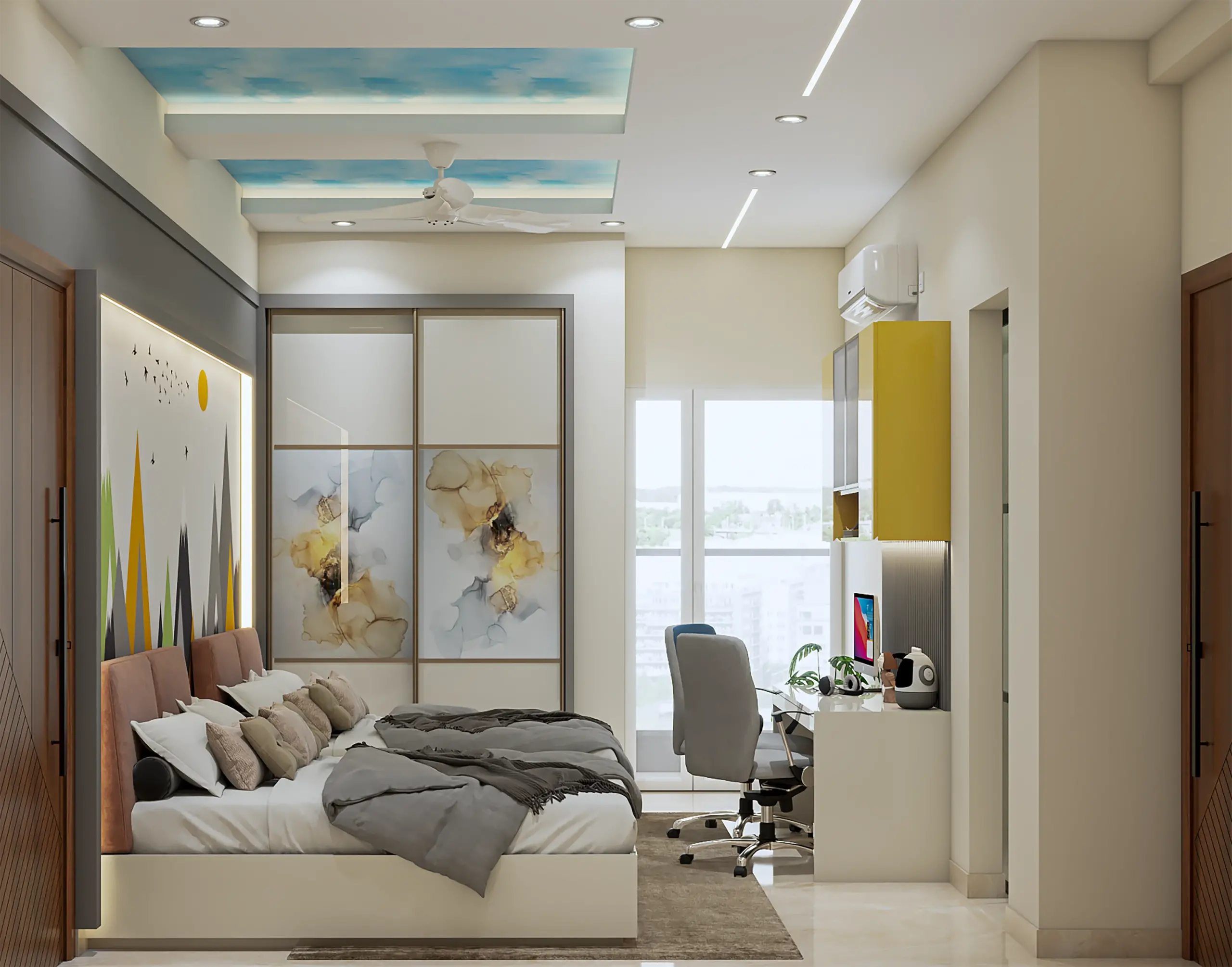
In many homes, the guest room is an underutilized space. But with some creative interior design and strategic planning, it can be transformed into a multi-functional room that serves as more than just a place for guests to sleep. Here at WeDezine, we’re passionate about designing spaces that enhance comfort and functionality, while reflecting our clients’ unique style. Whether you’re looking to create a guest room that doubles as a home office, a mini-gym, or a cozy reading nook, our tips will help you make the most of your space.
1. Define the Room’s Main Purposes
Before you dive into decor, define what you want from this multi-functional space. Some popular secondary functions include:
- Home Office: Ideal for remote work or casual productivity.
- Exercise Zone: Perfect for yoga, light workouts, or meditation.
- Reading or Relaxation Nook: Adds a quiet corner for lounging.
- Hobby or Craft Area: Great for art, sewing, or other hands-on activities.
Knowing the intended uses will guide your choices for furniture, layout, and decor.
2. Opt for Flexible, Space-Saving Furniture
Multi-functional furniture is key in maximizing a room’s utility without crowding it. Here are some versatile options:
- Sofa Bed or Daybed: Instead of a traditional bed, use a sofa bed or a daybed that converts into a bed when needed. This allows the room to serve as a sitting area or office space during the day.
- Foldable Desks and Tables: A wall-mounted desk or a folding table provides workspace but can be tucked away when guests arrive.
- Storage Ottoman or Bench: These pieces add seating and provide storage for extra bedding, pillows, or workout equipment.
- Murphy Bed: If space is really tight, a Murphy bed that folds up against the wall frees up floor space and gives the room a polished, open look.
3. Create Distinct Zones for Different Activities
To balance multiple functions in a single room, create designated zones that subtly define each area. This can be achieved by:
- Using Rugs and Room Dividers: Placing a rug under a desk or workout mat visually separates that space from the sleeping area. Lightweight screens or sliding panels can also section off parts of the room for privacy.
- Accent Lighting: Install task lighting for specific zones. For example, a desk lamp on the work area and a reading light by the bed help guests understand the room’s purpose and use it comfortably.
4. Incorporate Ample Storage Solutions
Since this room serves dual (or more) purposes, clever storage is essential to keep it tidy. Here are a few ideas:
- Built-in Shelving: Maximize wall space with floating shelves or built-ins, ideal for storing books, office supplies, or decorative items.
- Under-Bed Storage: Use storage bins or drawers that slide under the bed for stashing guest linens, seasonal items, or exercise equipment.
- Closet Organization: Add shelves or cubbies to the closet to accommodate office supplies, guest towels, or personal items that guests may need during their stay.
5. Select a Neutral Yet Inviting Color Palette
Choosing the right color palette can create a cohesive look that suits all functions of the room. A neutral or soft color scheme with shades of beige, grey, or pastel hues adds tranquility while allowing you to incorporate small pops of color in accents and decor.
Opt for tones that reflect a warm, welcoming vibe for guests yet offer a productive and relaxing atmosphere for other activities. Earthy greens, warm whites, and soft blues are popular choices that balance calmness and sophistication.
6. Add Personal Touches for Guests
Though this room will serve multiple purposes, it’s still important to make it feel welcoming for guests. Consider these touches:
- Guest Essentials: Stock the room with fresh towels, a reading lamp, a small mirror, and basic toiletries for added comfort.
- Welcoming Decor: A small vase with fresh flowers, some local art, or cozy throw blankets can give a warm, homey touch.
- Smart Amenities: Wi-Fi details, a charging station, and a small basket with snacks or coffee supplies make the room even more guest-friendly.
7. Optimize the Layout for Flow and Accessibility
A multi-functional room should have a layout that makes switching between activities easy and convenient. Consider placing the bed in a corner to leave more open space, or, if possible, aligning the desk or workout area near a window to enjoy natural light.
Avoid clutter by ensuring each piece of furniture has a purpose, and make sure there’s enough space to walk around comfortably. For rooms that double as a home office, position the desk near an outlet and away from distractions.
8. Keep It Low-Maintenance and Versatile
Choosing low-maintenance furniture and decor ensures the room remains neat and easy to reset. Durable fabrics, washable rugs, and furniture with easy-to-clean surfaces are practical options that allow the room to withstand multiple uses.
Consider modular or movable furniture, like a foldable desk or rolling cart, that can easily be adjusted as needed. This keeps the space flexible for unexpected needs.
Final Thoughts
A well-designed, multi-functional guest room maximizes space and enhances the room’s purpose. By selecting the right furniture, defining zones, and adding thoughtful touches, you can create a room that’s ready for guests yet functional for daily life. Here at WeDezine, we specialize in crafting spaces that look beautiful and work for you—reach out to us for a consultation if you’d like help creating the perfect multi-functional guest room in your home.
With our expertise and your vision, we’ll make sure that your guest room is both a haven for visitors and a valuable addition to your lifestyle.
