
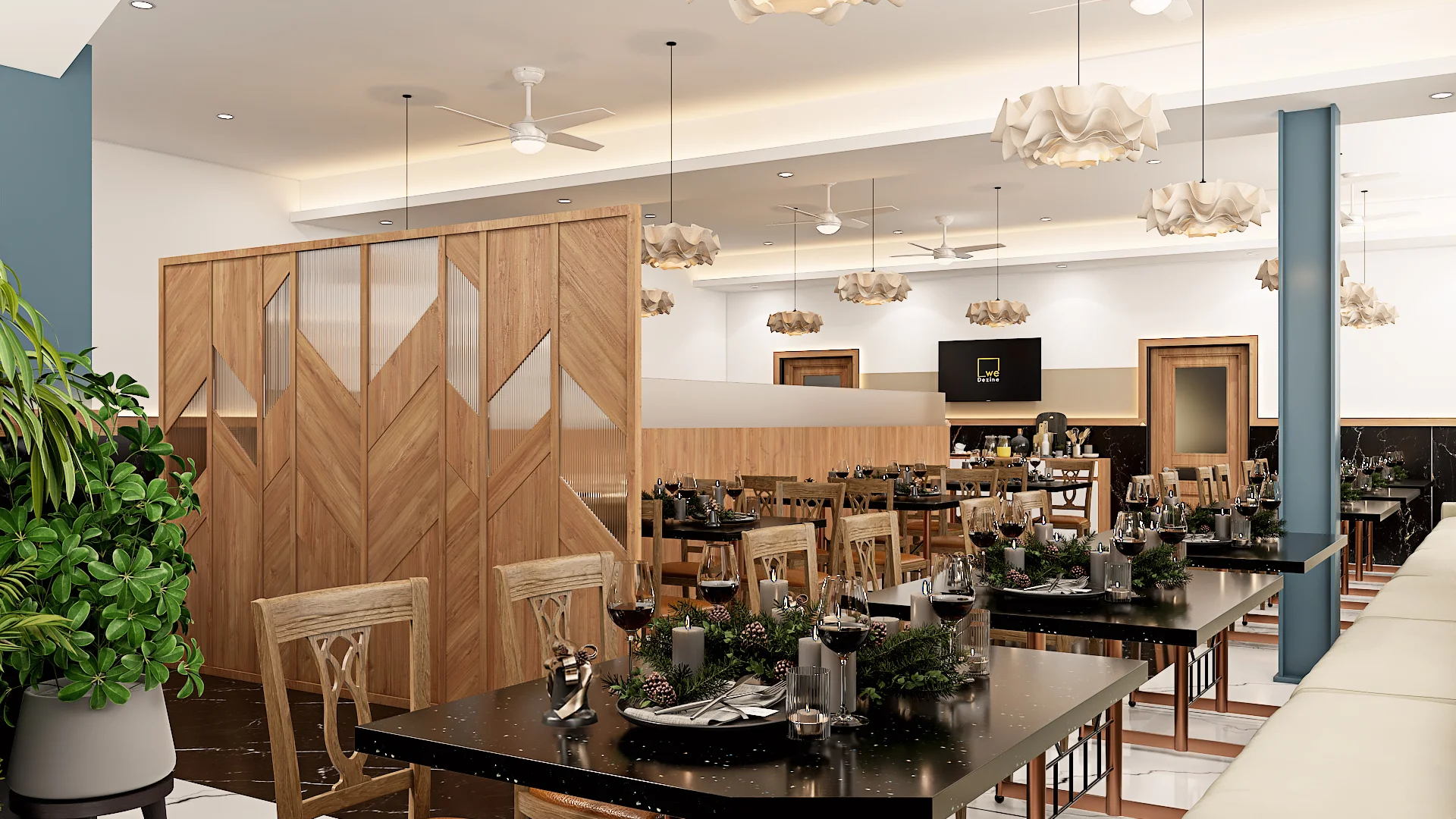
The restaurant industry in Bangalore is highly competitive, with diners seeking not just great food but also a memorable ambiance. If you’re in the process of designing a restaurant, it’s essential to make the space not only functional but also visually captivating. A thoughtfully designed interior can be a significant draw for customers and can contribute immensely to the overall dining experience. Here are some expert tips from WeDezine to help you create a restaurant that truly stands out in Bangalore’s vibrant dining scene.
1. Create a Distinctive Theme
The theme of a restaurant sets the tone for the entire dining experience. Whether it’s a chic modern café, a rustic farm-to-table establishment, or a traditional Indian bistro, selecting a theme can help you design cohesive interiors that captivate customers. To make your theme more effective, incorporate subtle details that reflect it—from color schemes and decor to furniture and lighting. Ensure your chosen theme aligns with your cuisine and target audience.
2. Focus on the Layout
A well-designed layout is the foundation of any successful restaurant. The layout should ensure smooth movement for both staff and customers. Consider the balance between seating capacity and comfort; overcrowded seating can make guests feel uncomfortable, while overly spaced-out tables may affect the lively ambiance. Divide the space smartly between dining, waiting, and utility areas. Optimize paths for servers to minimize travel time, which enhances efficiency and reduces wait times for diners.
3. Make Lighting a Priority
Lighting can make or break the dining experience. The right lighting enhances the mood, highlights decor, and even makes food look more appealing. Try combining different lighting elements like ambient, task, and accent lighting. Ambient lighting provides general brightness, task lighting is focused (like on tables), and accent lighting highlights specific areas. Dimmed, warm lighting is ideal for a cozy, intimate feel, while brighter lighting can be a great choice for casual, fast-paced environments.
4. Choose Comfortable, Stylish Seating
Seating is a critical factor in ensuring that guests feel comfortable and want to linger. While choosing seating options, balance comfort with style. Use furniture that aligns with your theme, whether it’s sleek and modern or rustic and traditional. Booths, benches, and a variety of table sizes can accommodate different party sizes and add visual interest to the layout. Always prioritize ergonomic comfort to keep guests relaxed and eager to return.
5. Use Color Strategically
Colors play a significant role in influencing customer mood and perception. Warm colors like red and orange are known to stimulate appetite, making them popular in restaurant settings. Cooler tones like green and blue create a more relaxed vibe, which might be better suited to cafes or fine dining. Incorporate your color palette thoughtfully into walls, furnishings, and decor, but avoid overwhelming the space with too many bright or contrasting colors.
6. Incorporate Unique Decor Elements
Unique decor elements, such as statement wall art, indoor plants, custom-made furniture, or quirky lighting fixtures, can make your restaurant memorable. For instance, a neon sign with a catchy phrase can be a focal point that encourages guests to take photos—essentially free marketing through social media. Consider showcasing local artwork or handmade pieces that reflect the culture and personality of Bangalore.
7. Optimize Acoustics
Noise levels play a significant role in the dining experience. Loud spaces can make it difficult for guests to converse comfortably, while too-quiet spaces may lack energy. Use materials that help absorb sound, such as carpets, wall panels, or wooden furnishings, to maintain a balanced acoustic environment. This ensures a lively yet comfortable atmosphere that doesn’t strain customers’ conversations.
8. Plan for Flexibility
Trends and customer needs evolve, so it’s essential to create a space that can be easily modified. Use modular furniture and adaptable layouts that can be rearranged for different occasions or themes. Movable dividers and flexible seating allow for private dining or larger gatherings, which can accommodate a range of customer preferences. This adaptability will allow your restaurant to evolve without requiring a complete redesign.
9. Integrate Technology Thoughtfully
Today’s diners expect convenience, and technology can enhance their experience. From self-order kiosks to digital menu boards, smart technology can make the dining process more efficient. However, it’s important to integrate tech elements that align with your restaurant’s vibe. For instance, a high-tech ordering system might not suit a rustic-themed eatery, but a QR code menu could be a subtle, low-tech solution for easy ordering.
10. Make the Entrance Inviting
First impressions matter. An eye-catching entrance draws people in and gives them a sense of what to expect. Use distinctive signage, attractive lighting, and other decor elements to create a welcoming feel. Plan for an Instagram-worthy element that reflects your restaurant’s personality right from the entrance, whether it’s a statement door, a unique sign, or a beautiful lobby area.
Final Thoughts
Designing a restaurant that stands out is about balancing aesthetics with functionality. A well-designed space creates a memorable dining experience, inviting customers to return and spread the word. By implementing these tips, you can create an environment that enhances your culinary offerings and resonates with customers, helping your restaurant become a unique and popular destination in Bangalore.
